Cross stitch, embroidery and needlepoint all use a needle and thread, so they're easy to mix up – and shops and kits don't always use the words the same way. This guide explains what makes each one different, what you need for it, and which is the friendliest place to start.
Is cross stitch a type of embroidery?
Yes. Embroidery is the big family name for decorating fabric with thread. Cross stitch is one branch of it, needlepoint is a close cousin, and there are many others. When people say “embroidery” on its own, though, they usually mean surface embroidery – the freehand kind with flowers, leaves and lettering in lots of different stitches. That's how we'll use it here.
Counted cross stitch
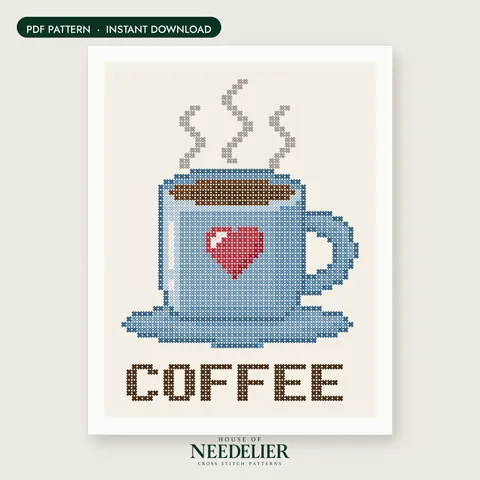
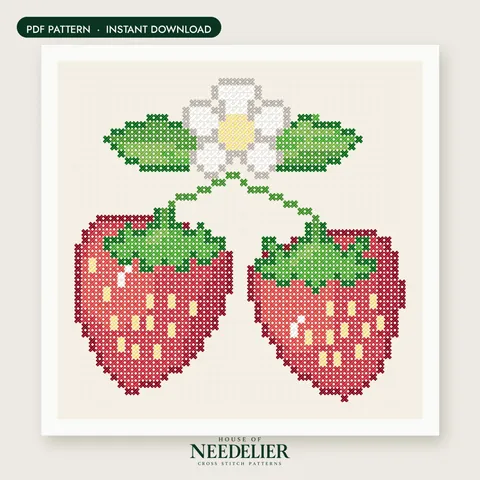
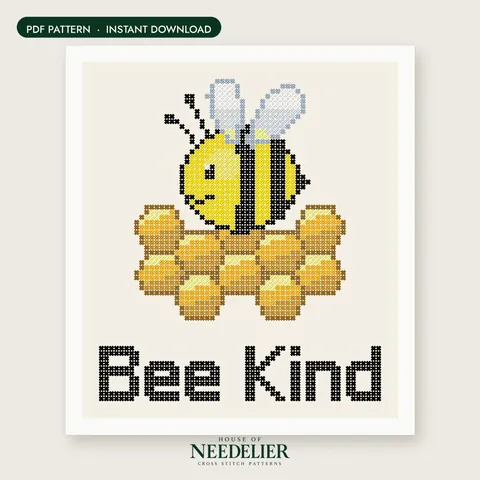
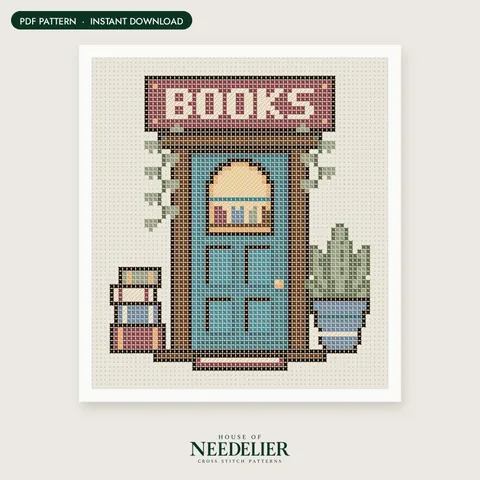
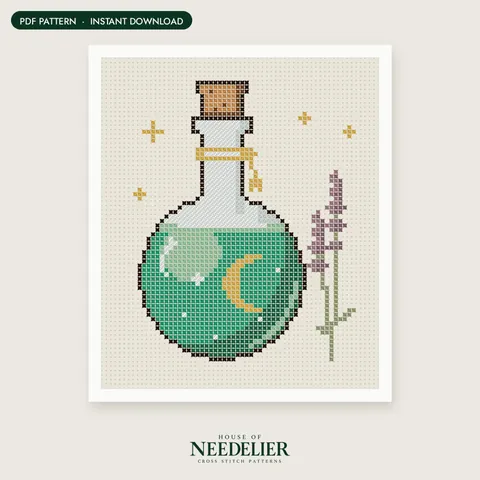
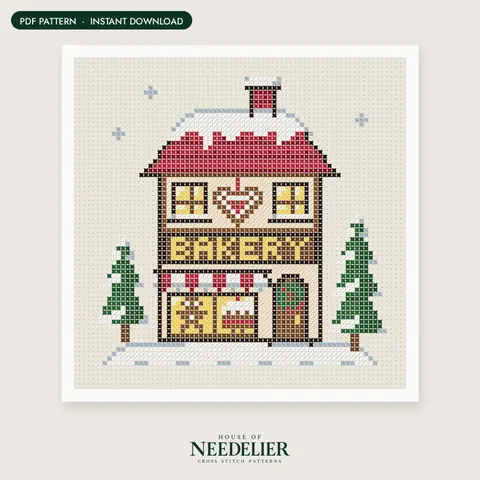
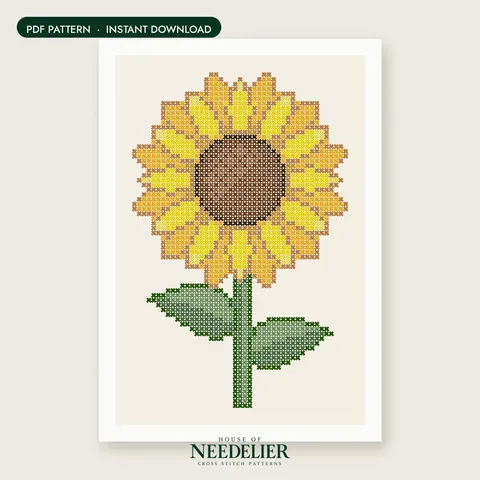
Counted cross stitch is built from one stitch: a small X that fills one square of the fabric. You follow a chart – a grid where each square stands for one cross – and count the squares to know where each stitch goes. Nothing is printed on the fabric.
- Fabric: an evenly woven fabric with countable holes. Beginners usually start with Aida, which has clear holes in a neat grid; experienced stitchers often use evenweave or linen, stitching “over two” threads. See Aida vs. evenweave vs. linen.
- Thread: six-strand cotton embroidery floss, separated into single strands and stitched with one to three strands at a time (two strands on 14 count Aida is the classic choice).
- Needle: a blunt tapestry needle, which slips through the holes without splitting the fabric.
- Look: a picture made of tiny even squares, a bit like pixels. Unstitched areas usually stay as plain fabric.
Because every stitch sits on a grid, counted cross stitch is very forgiving: a chart tells you exactly what to do, and a wrong stitch is easy to spot and unpick. All our patterns are counted cross stitch with full stitches only.
Stamped cross stitch
Stamped cross stitch is the same X stitch, but the design is printed on the fabric – usually as colored crosses – so you stitch on top of the printing instead of counting. It's common on kits for pillowcases, tablecloths, baby quilts and samplers.
It's relaxing because there's no counting, but there are trade-offs: the fabric is often a plain cotton without visible holes, so stitches can be less even, the printing isn't always perfectly lined up, and the ink needs to wash out completely when you're done. Most stitchers who try both end up preferring counted work.
Surface embroidery
In surface embroidery, the design is drawn or transferred onto the fabric and you stitch along and inside the lines, freehand. There's no grid, so stitches can be any length and run in any direction.
- Fabric: a smooth, tightly woven fabric such as cotton, linen or a cotton blend, held taut in a hoop.
- Thread: six-strand floss is popular, along with pearl cotton, wool and silk.
- Needle: a sharp embroidery (crewel) needle with a long eye, because it has to pierce the fabric.
- Stitches: dozens of them – backstitch, stem stitch, split stitch, chain stitch, satin stitch, French knots, lazy daisies and more.
The result is freer and more textured, with raised knots and smooth satin-stitched petals. You'll learn more stitches, and keeping stitches even takes practice because there are no holes to guide you.
Needlepoint
Needlepoint is stitched on canvas: a stiff, open mesh of threads. The aim is to cover the canvas completely, background included, so the finished piece is thick and hard-wearing – ideal for cushions, footstools, belts, Christmas stockings and bags. In the UK, needlepoint kits are often sold as “tapestry”, although a true tapestry is woven on a loom.
- Canvas: mono, interlock or Penelope canvas, measured in holes per inch (“mesh”), typically from about 10 to 18 mesh. Plastic canvas is a stiffer, simpler version used for 3D pieces.
- Thread: usually wool – tapestry wool or Persian wool – though cotton and silk are used too.
- Needle: a blunt tapestry needle, often a larger size than for cross stitch.
- Stitches: mainly tent stitch, a small diagonal stitch over one intersection of the canvas, worked in continental or basketweave style. Many decorative stitches exist too.
- Design: either painted on the canvas, so you match colors as you go, or charted on a grid like cross stitch.
Side-by-side comparison
| Counted cross stitch | Stamped cross stitch | Surface embroidery | Needlepoint | |
|---|---|---|---|---|
| How you follow the design | Count from a chart | Stitch over printed Xs | Stitch over drawn lines | Painted canvas or chart |
| Fabric | Aida, evenweave, linen | Printed cotton | Cotton, linen | Stiff open-mesh canvas |
| Thread | Stranded cotton floss | Stranded cotton floss | Floss, pearl cotton, wool | Wool (sometimes cotton or silk) |
| Needle | Blunt tapestry | Embroidery or tapestry | Sharp embroidery | Blunt tapestry |
| Main stitch | Full cross | Full cross | Many different stitches | Tent stitch |
| Background | Usually left unstitched | Left unstitched | Left unstitched | Fully covered |
| Usually held in | Hoop, Q-snap or frame | Hoop | Hoop | Stretcher bars or in hand |
Which one should I start with?
For most people, counted cross stitch on 14 count Aida is the gentlest start:
- You only need to learn one stitch to finish a whole picture.
- The holes in Aida show you exactly where the needle goes.
- Supplies are inexpensive: a small piece of fabric, a few skeins of floss, a tapestry needle and a hoop.
- Mistakes are easy to see and undo.
- Charted patterns cover almost any subject, from tiny motifs to large scenes.
If you love the idea of texture and drawing with thread, surface embroidery is a lovely second craft – and if you want something sturdy that you'll use every day, needlepoint is worth a try. Many stitchers end up doing all three.
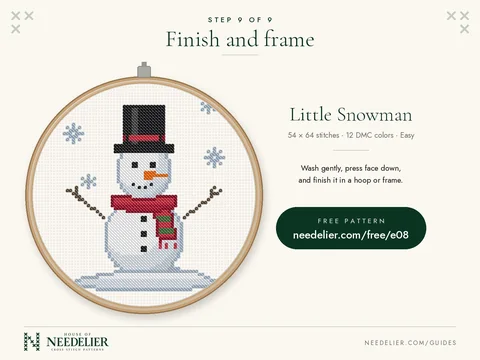
Ready to try it? Our free patterns are a nice, no-risk way to start, and the guide below walks you through supplies and your first stitches.
Next: Getting started with counted cross stitch.
Frequently asked questions
What is the main difference between cross stitch and embroidery?
Cross stitch uses one X-shaped stitch placed on a grid, usually counted from a chart. Surface embroidery uses many different stitches worked freely over a design drawn on the fabric.
Is needlepoint the same as cross stitch?
No. Needlepoint is worked on stiff canvas, usually with wool in tent stitch, and covers the whole surface including the background. Cross stitch is worked on softer fabric such as Aida or linen with cotton floss, and the background is usually left unstitched.
Can I use a cross stitch pattern for needlepoint?
Yes. Both are charted on a grid, so each chart square becomes one tent stitch on the canvas. The finished size depends on the canvas mesh, the colors will look a little different in wool, and you'll need to choose a color for any background left empty on the chart.
Is stamped or counted cross stitch easier for beginners?
Stamped cross stitch needs no counting, so it can feel easier on day one. Counted cross stitch on Aida usually gives neater, more even results, and most beginners find counting quick to learn with a chart that has bold lines every 10 squares.
What needle do I need for cross stitch?
A blunt tapestry needle, which passes through the fabric holes without splitting threads. A size 24 is the usual choice for 14 count Aida; see what size needle for cross stitch for other fabrics.