The best first cross stitch project is one you actually finish. A small, cheerful design that you complete in a week or two teaches you more – and feels much better – than a big masterpiece that stalls on page three. Here's what to look for when you choose a beginner pattern.
1. Keep it small
Look at the stitch count (for example 54 × 64) rather than the picture. For a first project, something up to about 60–70 stitches across is plenty. On 14 count Aida that comes out around 4 to 5 inches wide – the size of a coaster or a small hoop.
A small design also means:
- the chart fits on one or two pages, so there's little page-turning;
- you only need a small piece of fabric and a 6–7 inch hoop;
- mistakes are quick to fix.
If you're not sure how big a design will be, the fabric count guide shows the simple formula.
2. Fewer colors, bigger blocks
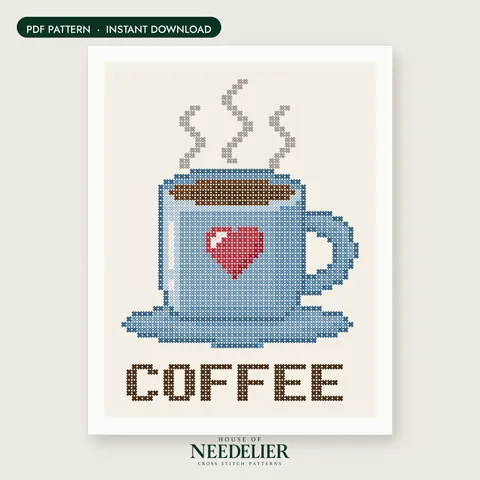
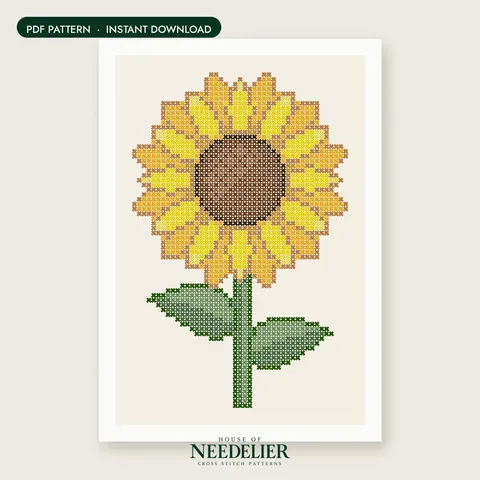
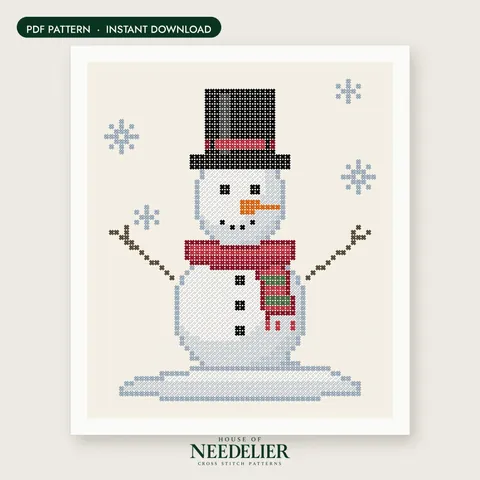
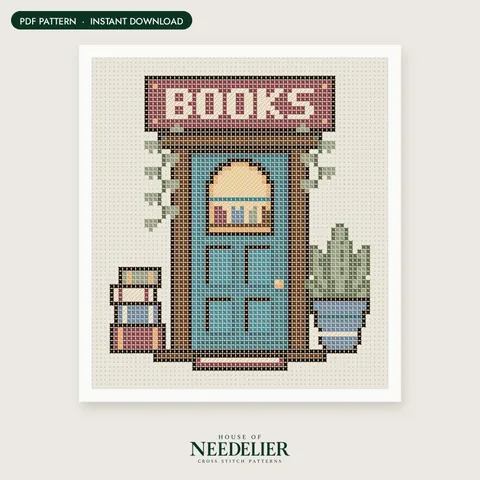
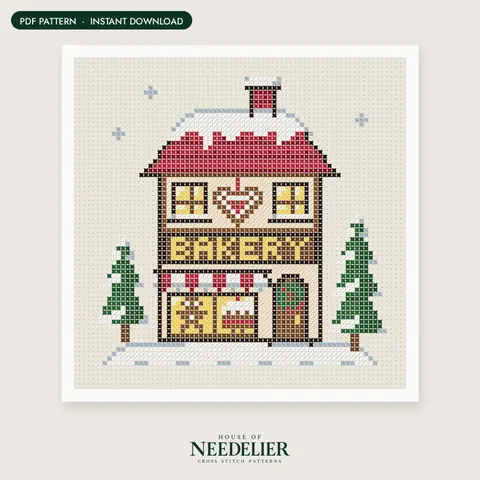
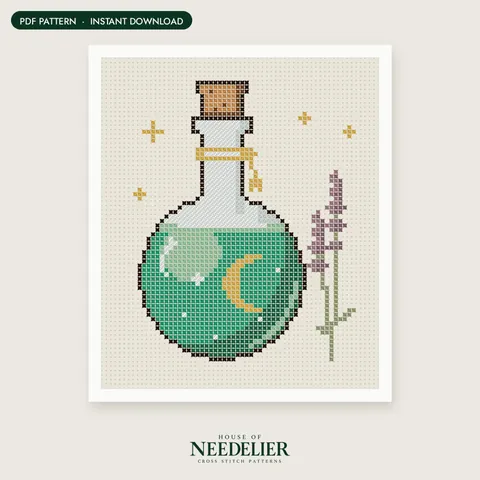
A pattern with around 12 colors or fewer is easy to manage: fewer threads to sort, fewer symbols to learn, fewer skeins to buy. Just as important is how the colors are used. Look at the chart for large areas of a single color – a red mug, a yellow sunflower, a white snowman. You can stitch these in calm rows and see progress fast.
3. Avoid “confetti”
Confetti is the stitcher's word for single stitches of a color scattered among other colors. Each one means starting and ending a thread or carrying it across the back. Photo-realistic designs and detailed shading are full of confetti – lovely, but slow and fiddly for a first project. Choose a design with clear shapes and solid areas instead.
4. Full stitches only
Some patterns use fractional stitches (quarter and three-quarter stitches) for curves and backstitch for outlines and lettering. They're not hard, but they add new techniques at the same moment you're learning to count. A pattern made of full cross stitches only lets you focus on one thing. Every House of Needelier pattern works this way – you can read more about the different stitches in our stitches guide.
5. A clear chart
A good chart has bold grid lines every 10 squares, arrows marking the center, a symbol on each square and a floss key with real DMC numbers. A black-and-white symbol version is handy for printing and marking off what you've done. If charts are new to you, read how to read our charts before you start.
How long will it take?
It depends entirely on you – stitching speed varies a lot from person to person, and it grows with practice. A rough way to think about it: if you stitch somewhere around 100 to 200 crosses an hour, a small design of about 1,500 stitches is roughly 8 to 15 hours of stitching. Spread over relaxed evenings, that's often one to three weeks.
To get your own estimate, stitch for 15 minutes, count the crosses, multiply by four – that's your stitches per hour. Divide the pattern's total stitch count by it.
Where to start
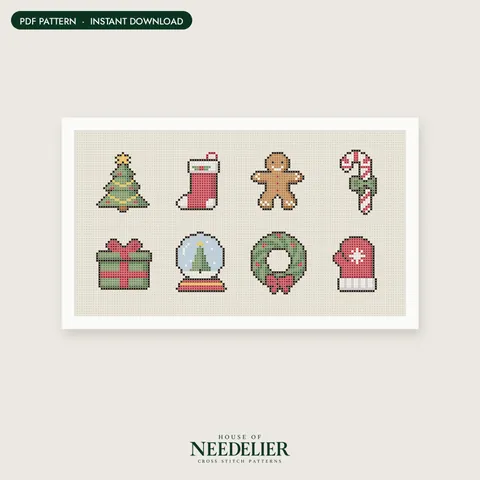
Our Easy patterns were designed with exactly these rules in mind: roughly 30–70 stitches across, 9–12 DMC colors and full cross stitches only. Good first picks are the Coffee Time Mug, Sunny Sunflower or the Little Snowman, and the Tiny Christmas Icons minis are even smaller if you want a one-evening win. Browse them by theme in the shop, or try one of our free patterns first.
Before your first stitch, read getting started for the supplies and set-up.